
What is moonstone?
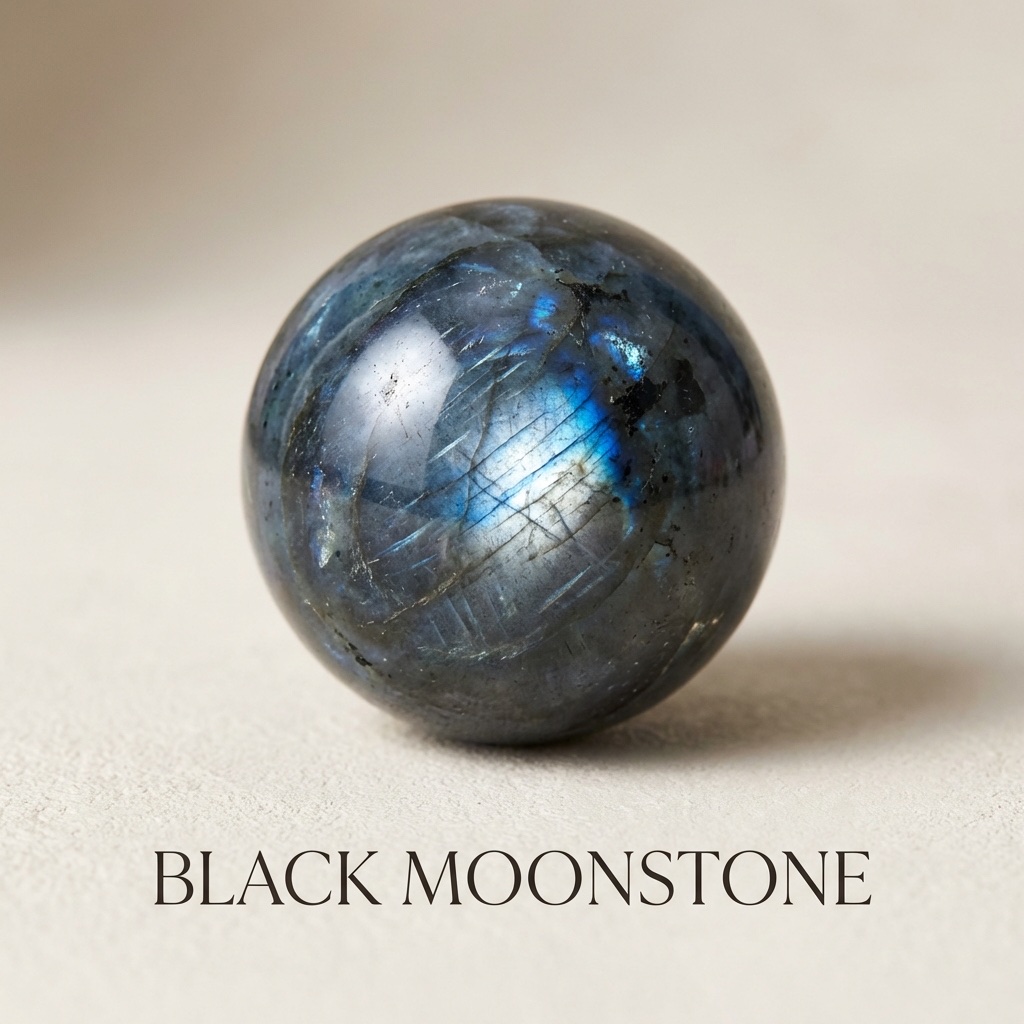
Moonstone is a feldspar, the most abundant mineral group in the earth’s crust — but feldspar only rarely grows like this. Moonstone forms when two feldspars, orthoclase and albite, separate into microscopically thin, alternating layers as the stone cools. Light entering the stone scatters between those layers, producing a soft, floating glow called adularescence: a blue-white sheen that seems to drift across the surface as you move it, like moonlight on water.
The most prized moonstones, almost transparent with a blue glow, come from Sri Lanka; India, Myanmar and Madagascar produce white, grey and peach stones. “Rainbow moonstone”, with its blue and multicoloured flashes, is strictly a variety of labradorite feldspar, though the trade name is universal. Moonstone measures 6 to 6.5 on the Mohs scale and is usually cut as smooth beads and domed cabochons, which show off its light best.
Moonstone meaning
In crystal tradition, moonstone is a stone of inner growth and strength. It is traditionally believed to soothe emotional ups and downs and bring the feelings back into balance, steady as the moon’s rhythm, which is why it is so often chosen during times of change. It is linked with intuition and new beginnings.
Moonstone has also long been a stone of love. In crystal lore it is said to help reunite lovers who have drifted apart, and it has a long history as a lovers’ gift; the Romans are said to have believed it was formed from moonlight itself. In Chinese it is 月光石 (yuè guāng shí), “moonlight stone”. It is a birthstone for June, and for 2026 it is our suggested stone for those born in the Year of the Goat — see crystals for the Year of the Fire Horse.
How to wear moonstone
Wear moonstone on your left hand. In crystal practice the left is the receiving side, so a moonstone bracelet on the left wrist is said to help you take in its calm, balancing energy and open yourself to love. Worn daily, it is a gentle companion through a season of change: a new relationship, a move, a new role at work. See which wrist to wear a crystal bracelet for the thinking behind it.
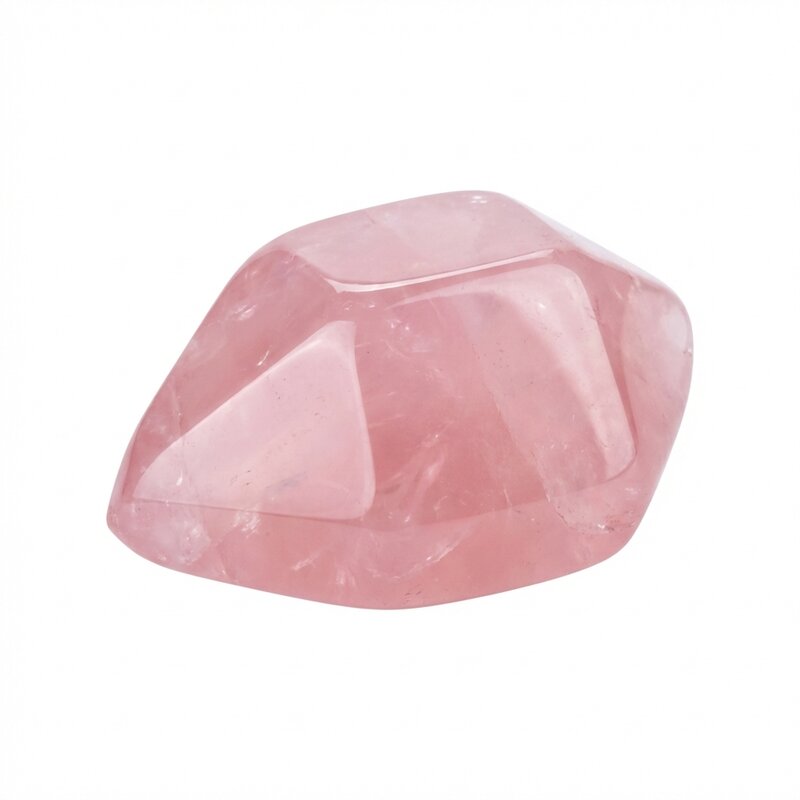
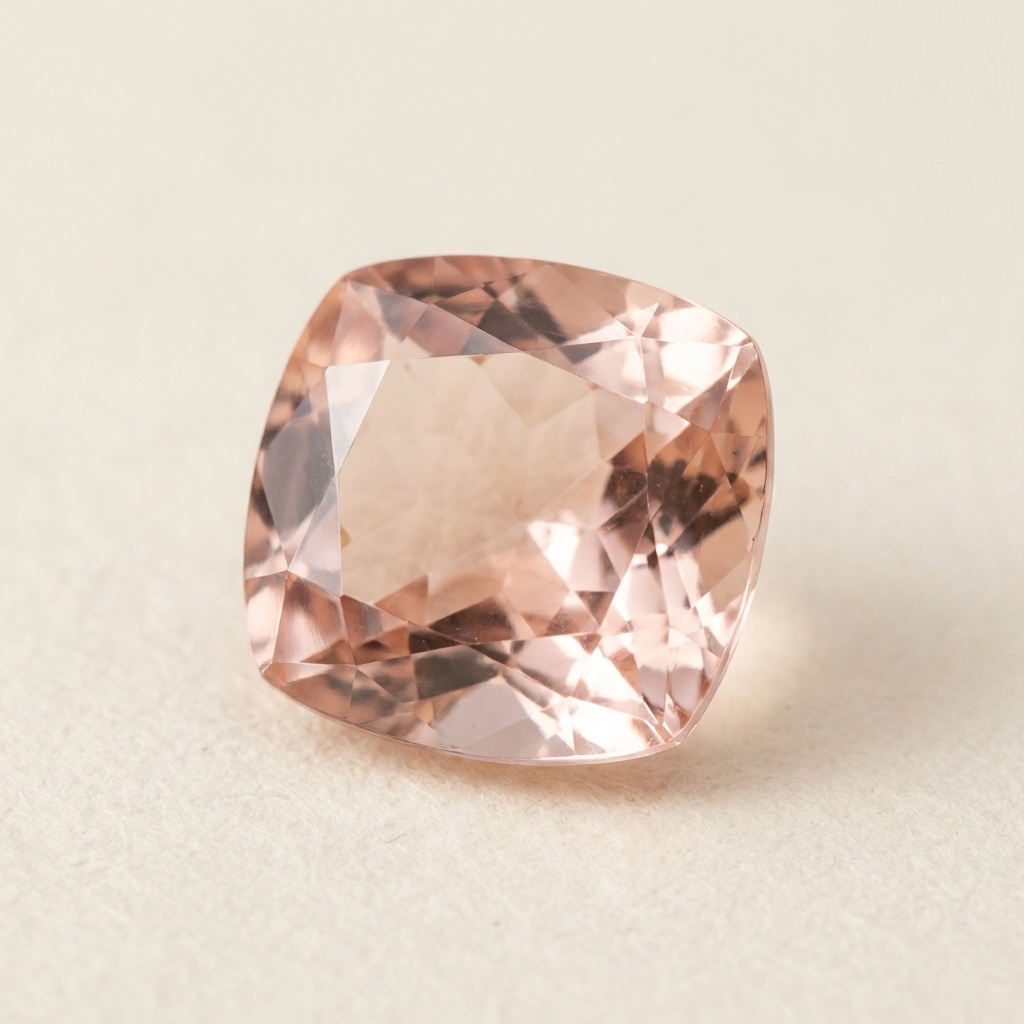
Moonstone is a natural partner for rose quartz, a classic combination for new love. With morganite it speaks of calm, mature affection; with labradorite it leans towards intuition. Its pale glow sits beautifully with 925 sterling silver, which is why moonstone rings, pendants and earrings are such perennial favourites. In crystal lore it is said to be at its strongest around the full moon.
Moonstone as a gift
Moonstone is one of the most meaningful stones to give. As a June birthstone, it is a natural birthday present for anyone born that month; as a stone of love and reunion, it suits anniversaries, engagements and reconciliations. In India, moonstone is traditionally regarded as sacred and has long been given at weddings, a fitting echo for couples today.
It is also a lovely way to mark a beginning: a new mother, a graduate, a friend starting over in a new city. When choosing, look for a glow that moves as you tilt the stone; a little cloudiness is natural and does not take away from its meaning. For more ideas, see our guide to meaningful crystal gifts, or explore June and the other months on our gemstones page.
Caring for moonstone
At 6 to 6.5 on the Mohs scale, moonstone is fine for regular wear but less tough than it looks. Like all feldspars it has two directions of cleavage, so a sharp knock can cause a crack or chip.
- Avoid hard knocks. Take moonstone off for the gym, housework and anything that might bump it against a hard surface.
- Clean gently. Use lukewarm water, a drop of mild soap and a soft cloth — keeping bracelet elastic as dry as you can — and never an ultrasonic or steam cleaner.
- Avoid sudden temperature changes, such as going straight from hot sun into cold water.
- Store it separately in a soft pouch, away from harder gems such as quartz and sapphire.
Many people cleanse moonstone under the full moon, a fitting ritual for a stone so tied to it; see how to cleanse crystals.
Crystal meanings are shared from tradition and folklore for reflection and enjoyment; they are not a substitute for medical or professional advice.