
Why people cleanse their crystals
In crystal tradition, stones are said to absorb the energy around them: a stressful week, a crowded MRT carriage, the hands of everyone who touched them before they reached you. Cleansing is the ritual of clearing that away. Recharging is the ritual of filling the stone back up with your own intention.
You do not need to accept every part of the lore to enjoy the practice. At its simplest, cleansing is a few quiet minutes with a piece you love: checking the beads, wiping away the day and deciding what you want it to hold for you next. None of the methods below needs special equipment, and each is gentle on the stones that suit it.
Five gentle ways to cleanse crystals
These methods suit almost every stone, and they are the safest place to start with a crystal bracelet:
- Moonlight. Leave your crystals on a windowsill overnight, ideally at the full moon, which is traditionally the strongest time for cleansing and recharging. Bring them in before the morning sun reaches them.
- Smoke. Pass each stone slowly through the smoke of sandalwood incense, sage or palo santo for a minute or so. Open a window first, and keep the smoke well away from your flat’s smoke detector.
- Sound. Ring a singing bowl, a small bell or a tuning fork beside your crystals. In crystal practice the vibration is said to shake loose stagnant energy, and it is the easiest way to cleanse a whole collection at once.
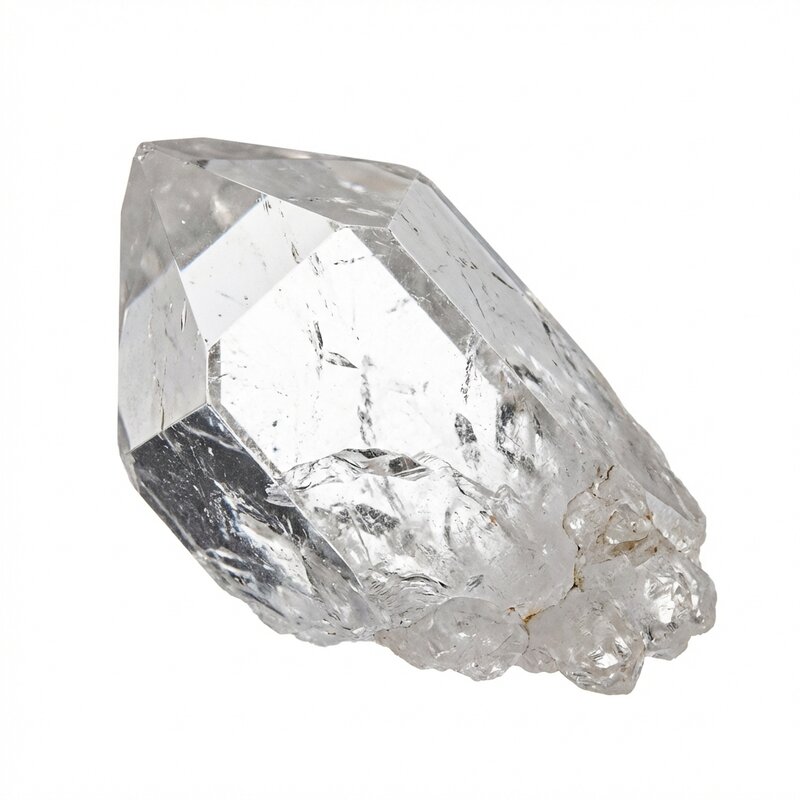
- Clear quartz. Rest your bracelet on a clear quartz cluster overnight. Known as the Master Healer, clear quartz is said to amplify and refresh the stones around it.
- Selenite. A selenite plate or wand does the same job and makes a pretty resting place for jewellery. Selenite is a form of gypsum, only 2 on the Mohs scale and slightly soluble in water, so keep it dry and never rest wet stones on it.
Cleansing with water: when it is safe
Running water is the oldest cleansing method, and it suits hard, non-porous stones from the quartz family: amethyst, rose quartz, citrine, clear and smoky quartz, tiger’s eye and carnelian. Hold them under a cool tap for a few seconds, then pat dry with a soft cloth.
With a strung bracelet, keep it brief. Water trapped inside the bead holes weakens elastic and cord over time, and in Singapore’s humidity a bracelet can take a long while to dry right through. Lay it flat on a towel until it is completely dry before you wear it again. Skip salt water altogether: salt can dull the polish of softer stones and tarnish any sterling silver spacers or charms.
Crystals that must not get wet
Some crystals are soft, porous or chemically sensitive, and water can damage them for good. Cleanse these with moonlight, smoke, sound or a quartz cluster instead:
- Pyrite. An iron sulphide that oxidises in moisture, losing its metallic shine and leaving rusty stains. In a humid climate, dry storage matters.
- Malachite. A soft copper mineral, 3.5 to 4 on the Mohs scale, that reacts with acids and household cleaners. Water dulls its polish over time, so wipe it with a dry cloth.
- Lepidolite. A lilac mica, only about 2.5 to 3 in hardness and built in thin layers. Water can work between them and loosen the surface.
- Fluorite. Soft, at 4 on the Mohs scale, and quick to split along its cleavage planes. Keep it out of water and away from harder stones.
- Selenite, turquoise, pearl and opal. Selenite is slightly soluble. Turquoise and pearl are porous and can discolour if soaked. Opal holds water within its structure and dislikes heat and sudden changes of temperature.
If you are unsure about a stone, leave it dry. Moonlight and sound never harm a crystal.
Crystals to keep out of the sun
Sunlight is sometimes suggested for recharging, but it can fade several of the most popular stones:
- Amethyst can pale with long exposure to sunlight or heat.
- Rose quartz can slowly lose its soft pink.
- Fluorite, especially purple and green pieces, can fade.
- Opal and pearl can dry out in heat; opal may develop fine cracks.
If you enjoy a sunlight ritual, keep it short and early, under an hour of soft morning light, and choose sturdy stones such as clear quartz and tiger’s eye. Never leave a clear quartz sphere in direct sun: it can focus light like a lens and scorch whatever lies beneath it. Moonlight is always the safer choice.
Setting an intention
Cleansing clears a stone; setting an intention gives it a purpose again. Hold the crystal in both hands, take a few slow breaths and say quietly, aloud or in your head, what you would like it to support. Keep it short and in the present tense: “I stay calm at work”, “I welcome love in”, “I am grounded when things get busy”.
Then wear it on the wrist that suits the job: receiving stones such as rose quartz and citrine on the left, protective stones such as black tourmaline on the right. Our guide to which wrist to wear your crystal bracelet on goes through each stone.
How often to cleanse
- When a stone is new to you, before you wear it for the first time.
- Once a month, at the full moon, as a simple routine.
- After a hard day or a difficult conversation, if the stone feels heavy to you.
- After someone else has handled it, or when it has been put away for a long time.
Protective stones that are said to absorb negativity need it most. The traditional advice for black obsidian is to cleanse it frequently, and black tourmaline deserves the same care. At the other end, crystal lore holds that citrine does not hold negative energy and that super seven never needs cleansing, though many people include them in their monthly ritual simply because it is a pleasant habit.
Everyday care between cleanses
Energetic cleansing is not the same as keeping a piece clean. Wipe beads with a soft, dry cloth after wearing, and keep perfume, lotion and sunscreen off the stones. Take bracelets off before swimming, the gym and the shower, store them apart so harder beads cannot scratch softer ones, and have elastic restrung as soon as it starts to slacken. For silver pieces, see our guide to caring for 925 sterling silver.
Crystal meanings and feng shui are shared from tradition for reflection and enjoyment; they are not a substitute for medical, financial or professional advice.