
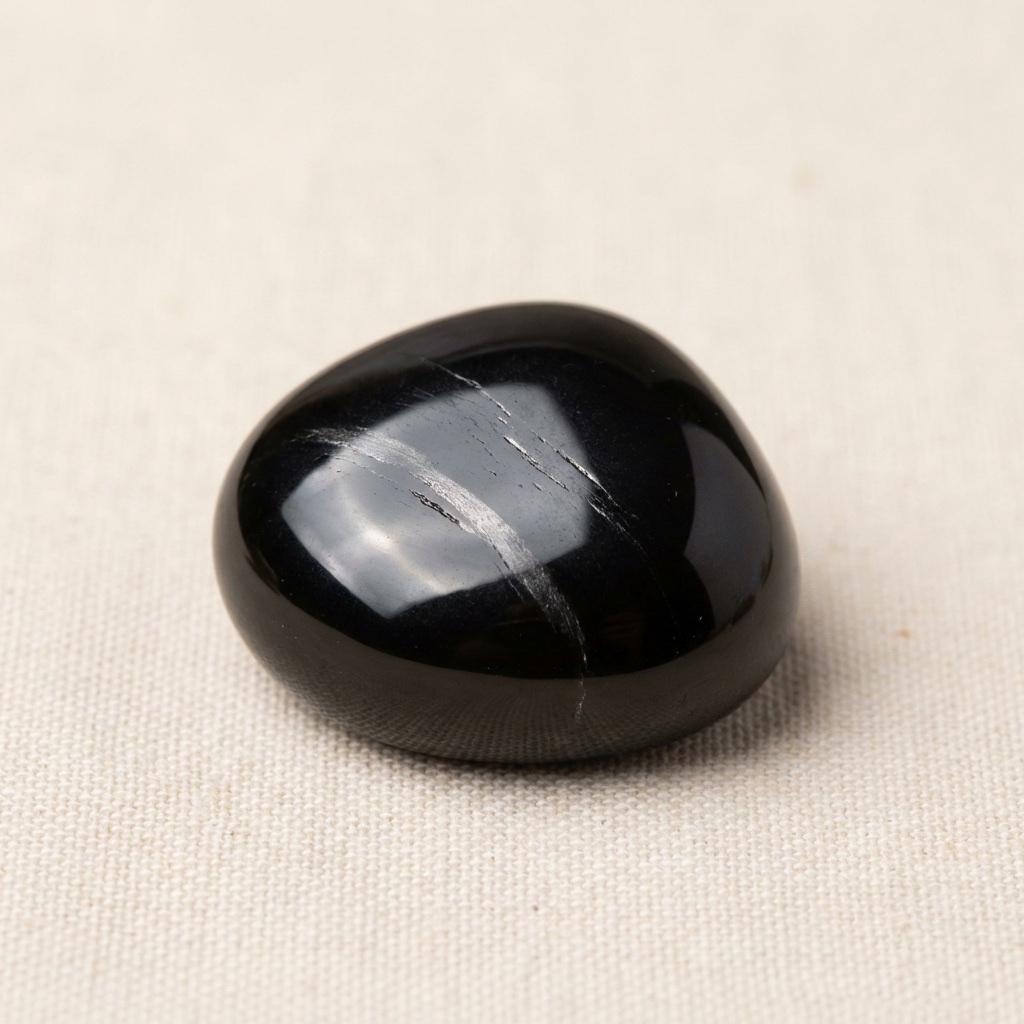
What is black obsidian?
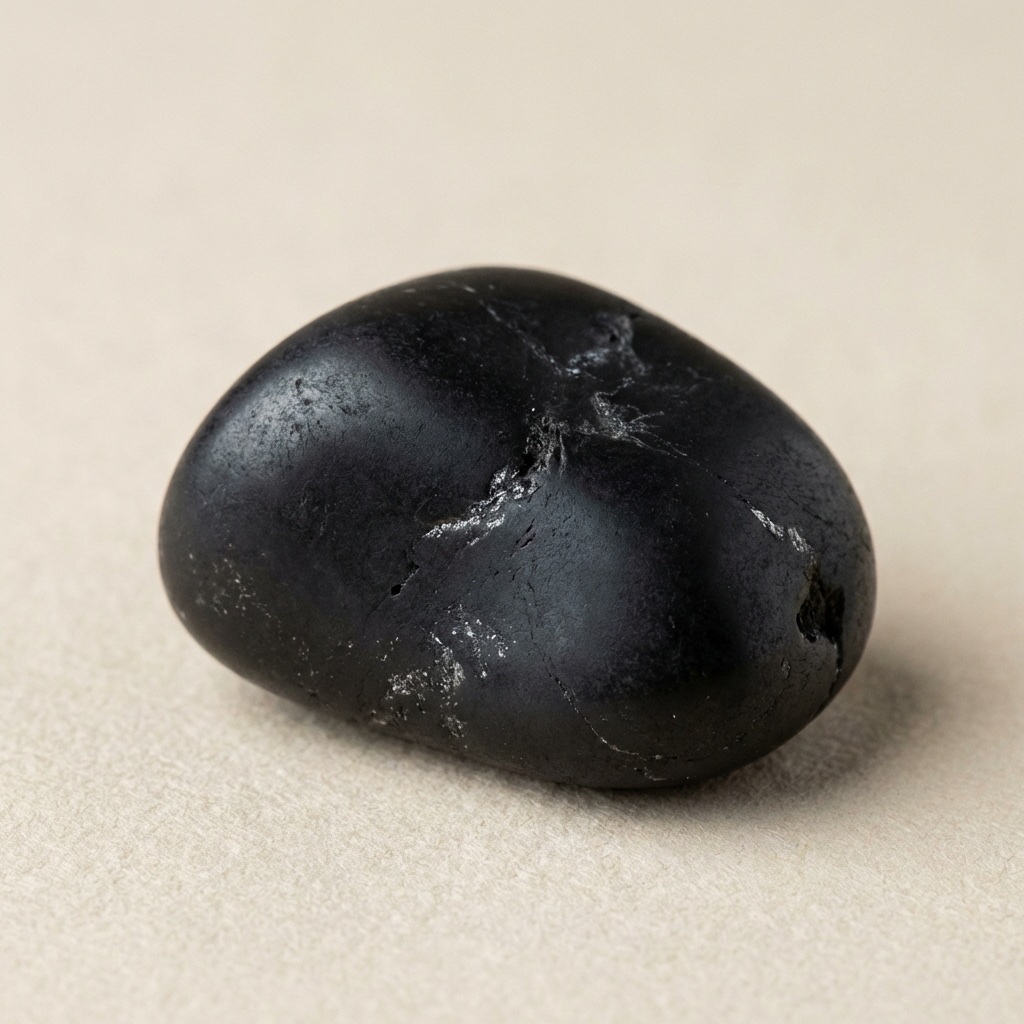
Black obsidian is natural glass. It forms when silica-rich lava cools so quickly that there is no time for crystals to grow, freezing the molten rock into a smooth, glassy solid. Because it has no crystal structure, geologists call it a mineraloid rather than a true mineral. Its colour comes from tiny particles of magnetite and other minerals suspended in the glass; tilt a good piece in the light and it has an almost liquid, mirror-like depth.
Obsidian breaks with smooth, curved (conchoidal) fractures and edges so sharp that ancient peoples from Mesoamerica to the Mediterranean shaped it into blades, arrowheads and polished mirrors. Much of the obsidian cut today comes from Mexico and the western United States. Look out for its relatives too: snowflake obsidian, with white mineral “snowflakes”, and golden-sheen and rainbow obsidian, whose shimmer comes from tiny inclusions aligned within the glass.
Black obsidian meaning
In crystal tradition, black obsidian is the great cleanser. It is often described as a vacuum cleaner for energetic smog, believed to draw negativity out of the environment and out of your own aura. Where black tourmaline is described as a shield, obsidian is said to absorb — which is why it is associated with clearing heavy moods, lingering tension and the residue of difficult days.
Its mirror-like surface has given it a second meaning: in crystal lore it is a stone of truth, said to reflect what we would rather not look at so that it can be faced and released. Its Chinese mineral name is 黑曜石 (hēi yào shí), but it is also known by its purpose, 化煞 (huà shà), “dissolving harmful energy” — a feng shui term for the protective role obsidian is famous for. It is often carved into the mythical pixiu 貔貅, a beast traditionally said to guard wealth and ward off harm.
How to wear black obsidian
Wear black obsidian on your right hand. In crystal practice the right is the outward-facing side, so an obsidian bracelet on the right wrist is said to screen what comes towards you and help release what you no longer need. Its plain, glossy black suits office wear and is worn by men and women alike, which is why a black obsidian bracelet is such a familiar sight in Singapore. For the thinking behind left and right, see which wrist to wear a crystal bracelet.
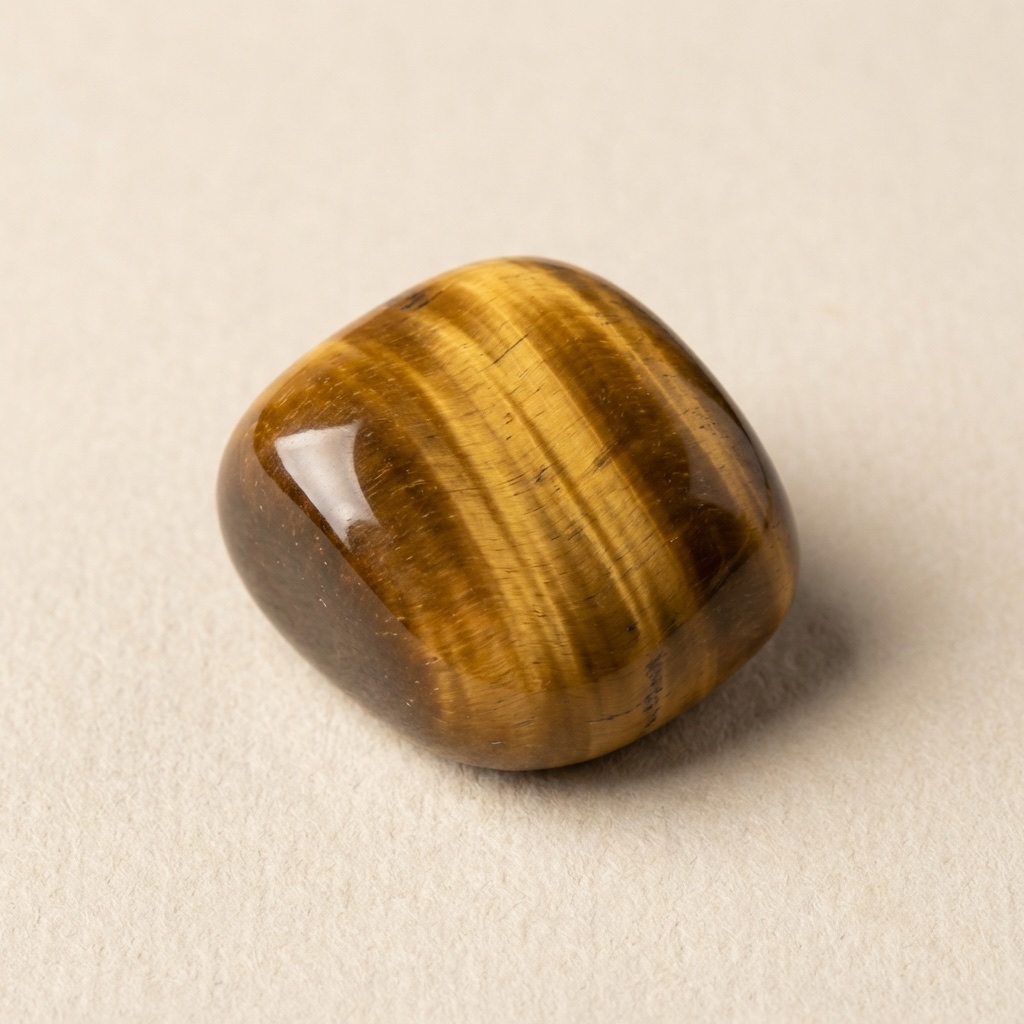
Obsidian pairs well with clear quartz, whose clarity balances its depth, and with tiger’s eye for grounded confidence. With black tourmaline or shungite it makes a strongly protective all-black bracelet.
Cleansing black obsidian
The traditional advice is to cleanse black obsidian frequently. Because it is believed to absorb rather than deflect, crystal practitioners say it can become “full”, and many owners cleanse it weekly, or after a draining day, a funeral or a crowded event.
Gentle methods suit it best: a few minutes in the smoke of incense, a night on the windowsill under the moon, the sound of a singing bowl, or resting it on a clear quartz cluster. Avoid rubbing it with salt, which can scratch the glassy surface, and long soaks that weaken bracelet elastic. Our guide on how to cleanse crystals goes through each method step by step.
Caring for black obsidian
At 5 to 5.5 on the Mohs scale, obsidian is softer than quartz and, being glass, it can chip if knocked against a hard edge. A little care keeps its mirror shine.
- Store it on its own. Quartz, tourmaline and other hard stones — even sand and grit — can scratch it; a soft pouch is ideal.
- Take it off for hard work. Remove your bracelet for the gym, gardening or anything that might bang it against a desk or railing.
- Clean with a soft cloth. Wipe with a damp cloth, then dry; keep perfume and hand cream off the beads.
A small chip on a bead is purely cosmetic, but if an edge becomes sharp, have the bracelet restrung without it.
Crystal meanings are shared from tradition and folklore for reflection and enjoyment; they are not a substitute for medical or professional advice.