
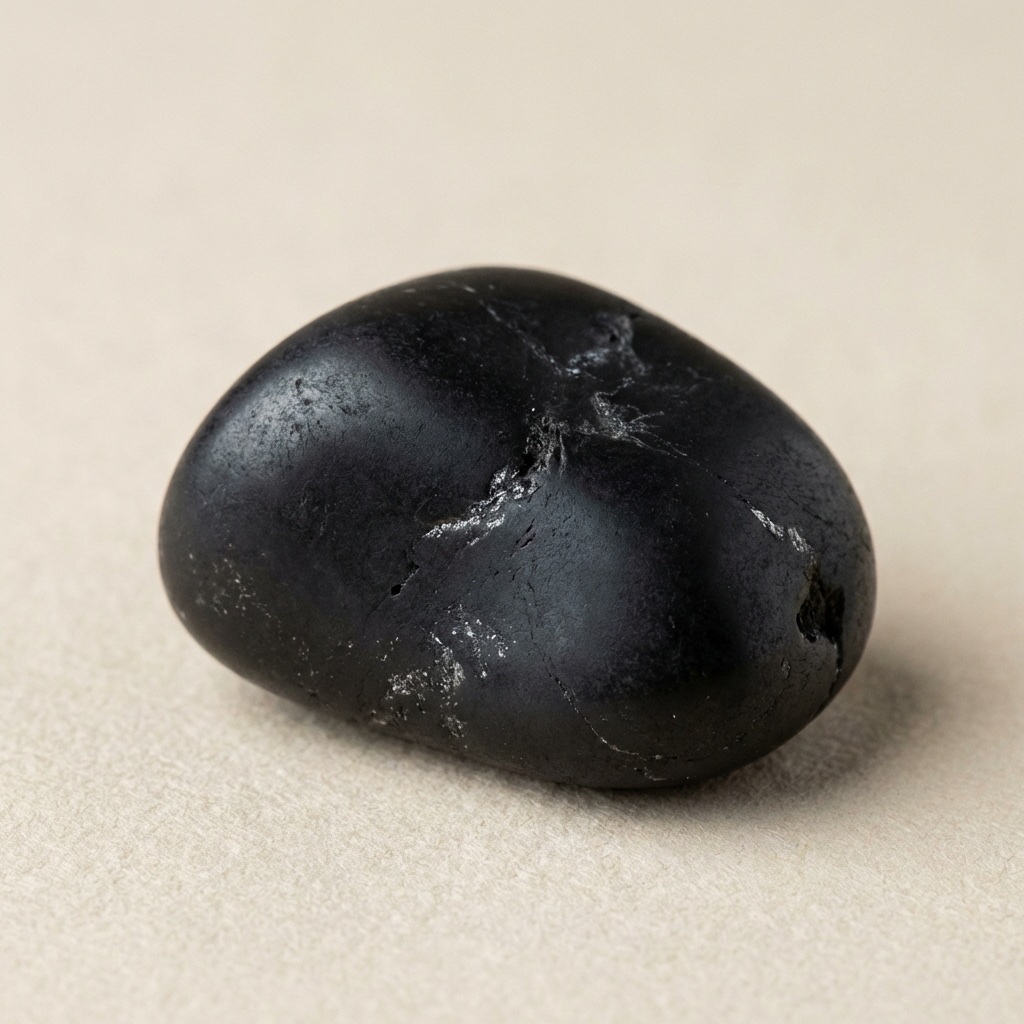
What is shungite?
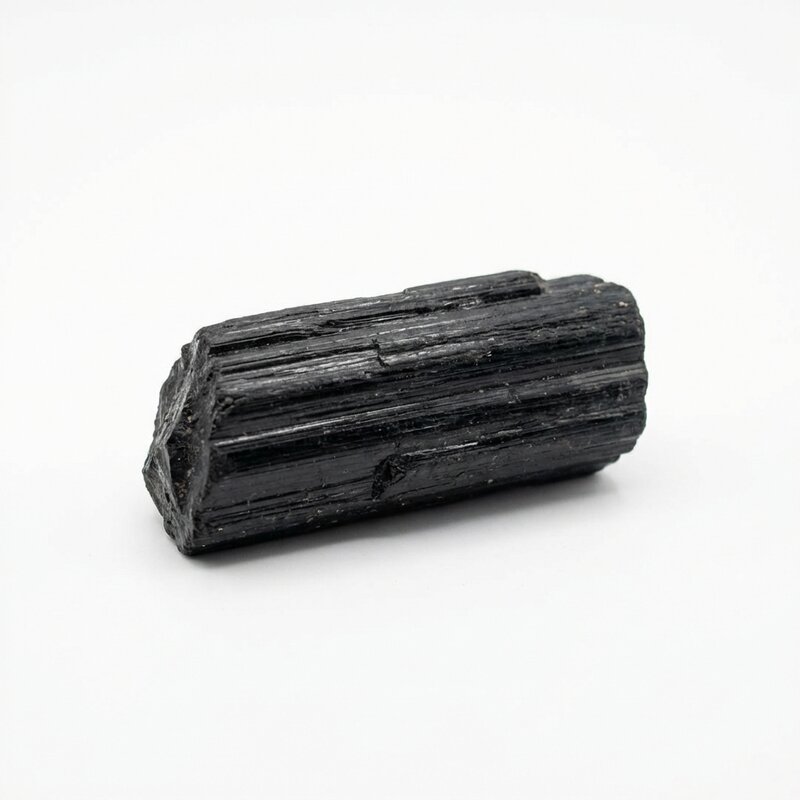
Shungite is one of the most unusual stones in the crystal world. It is not a crystal at all but a black, carbon-rich rock found almost exclusively in Karelia, in north-western Russia, around Lake Onega. It takes its name from the village of Shunga, where it was first described. The rocks are ancient — around two billion years old — and the carbon they contain is non-crystalline, which is why shungite is classed as a mineraloid rather than a mineral.
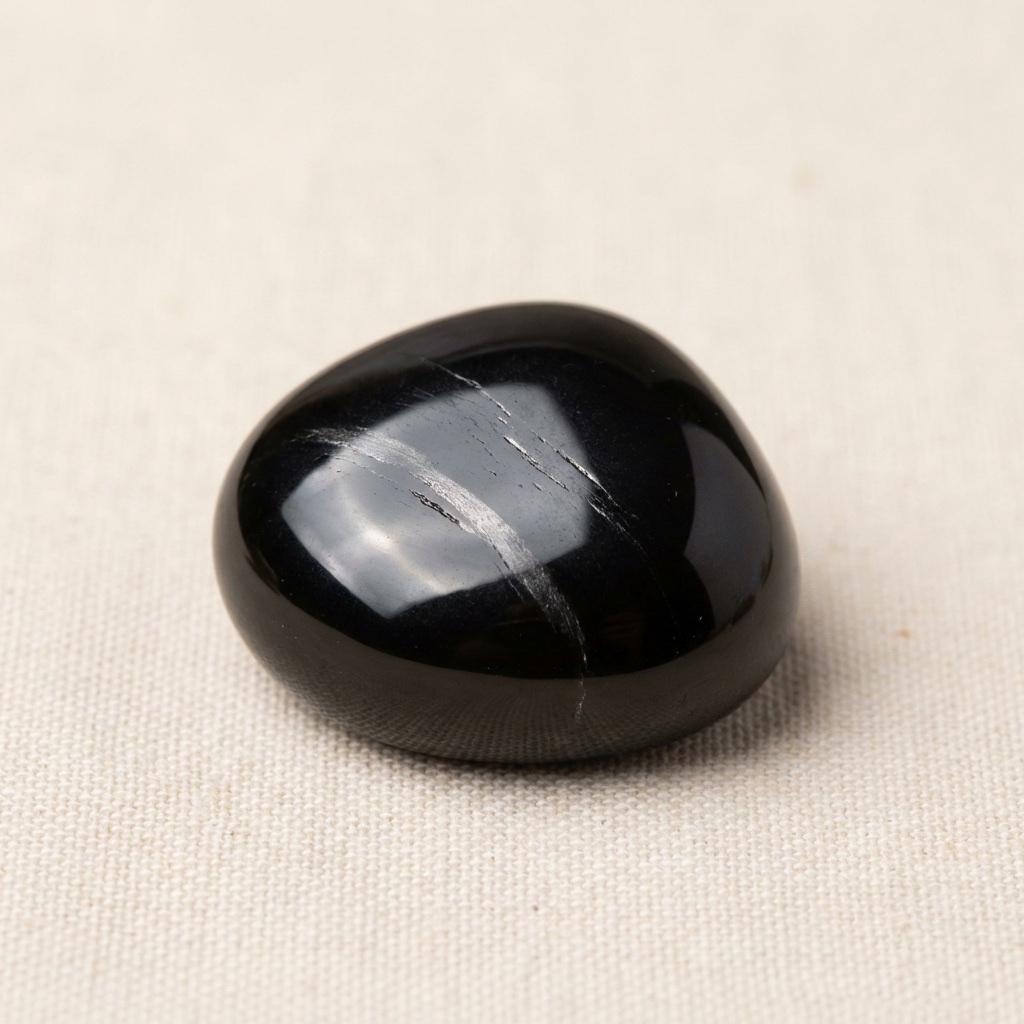
Most shungite in jewellery is regular black shungite, polished to a soft, satiny gleam. The rare “elite” or noble shungite, with the highest carbon content, is silvery and metallic but brittle, so it is usually sold as small raw pieces. Some studies have reported traces of fullerenes — unusual cage-shaped carbon molecules — in shungite, though the findings vary. It is a soft stone and feels surprisingly light in the hand.
Shungite meaning
In crystal tradition, shungite is a grounding and protective stone — a steady, earthy presence for people who feel scattered or overloaded. It is traditionally believed to absorb and neutralise negative energy, to draw you back into your body when your mind is racing, and to create a calm protective space around you. Its black colour links it with the root chakra, the energy centre associated with stability and security.
Many people are drawn to it precisely because of its age: in crystal lore, a stone that has lain in the earth for some two billion years is a symbol of endurance and deep-rooted strength. Its Chinese name, 次石墨, means roughly “lesser graphite”, a nod to its carbon-rich make-up. For a harder, everyday companion with a similar protective intention, see black tourmaline.
How to wear shungite
The traditional advice is to keep shungite close: wear it constantly, or keep a piece where you spend long hours. Many people place a polished shungite pyramid or sphere on the work desk beside the computer, as a grounding anchor through long screen-bound days, and another by the bed. Worn as a bracelet or pendant, it becomes a daily companion.
If you wear it as a bracelet, the right wrist — the outward-facing, protective side in crystal practice — is the usual choice; see which wrist to wear a crystal bracelet. Shungite pairs well with clear quartz, which adds clarity to its grounding, and with black obsidian or black tourmaline for a strongly protective all-black bracelet.
Choosing genuine shungite
Because it comes from essentially one region, shungite has its share of imitations. Genuine polished shungite is a soft, satin black rather than a glassy one, and it is noticeably lighter than most stones of the same size. Raw or unpolished pieces often leave a faint grey mark on paper or pale fabric, much like pencil lead — a sign of the carbon within.
Be cautious of very cheap pieces, or ones that feel heavy for their size. Buy from sellers who can tell you where the material came from, and treat bold marketing claims with healthy scepticism: shungite is a beautiful, ancient stone valued in crystal tradition, not a substitute for professional advice of any kind.
Caring for shungite
Shungite is soft, at roughly 3.5 to 4 on the Mohs scale, and scratches easily; elite shungite is also brittle and can crumble if dropped.
- Store it apart from other stones and metal jewellery, in a soft pouch or its own dish.
- Expect a little residue. Raw pieces can leave faint dark marks; wipe them with a dry cloth before wearing them near light clothing.
- Clean with a dry or barely damp cloth, and avoid soaps, cleaners and long soaks, which can dull the polish.
- Mind the elastic. Humidity and daily wear loosen bracelet elastic over time.
For energetic cleansing, smoke or sound suits it well; see how to cleanse crystals.
Crystal meanings are shared from tradition and folklore for reflection and enjoyment; they are not a substitute for medical or professional advice.