
How birthstones began
The idea of a stone for each month is ancient. It is often traced to the twelve gems set in the breastplate of the High Priest described in the Book of Exodus, which later writers linked to the months of the year and the signs of the zodiac. The modern lists took shape in the twentieth century, when jewellers standardised them, and several months gained a second stone along the way.
The calendar below follows the one in our crystal knowledge base. Where a month has two stones, both are traditional; choose the one that suits the person, their style and your budget.
January to March: garnet, amethyst, aquamarine
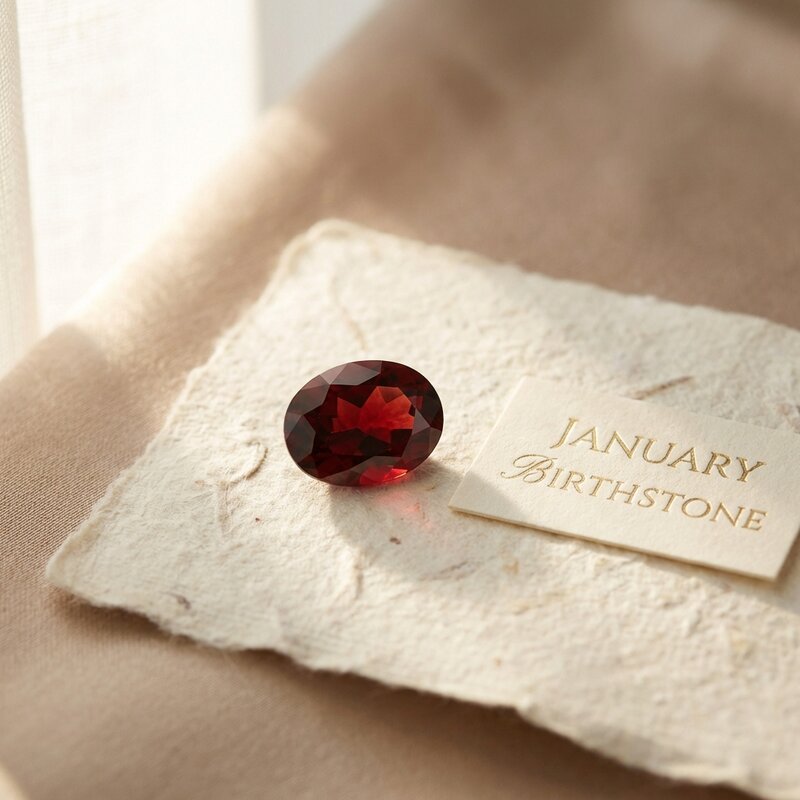
January: Garnet. Garnet is a family of silicate minerals rather than a single stone, and it comes in almost every colour, though deep wine red is the best known. At 6.5 to 7.5 on the Mohs scale, it is tough enough for daily wear. Its name is thought to come from the Latin for pomegranate, and its Chinese name, 石榴石 (shí liú shí), means the same: “pomegranate stone”. Garnet stands for protection and strength, and travellers once carried it for safe journeys. Gift idea: a garnet necklace, deep red garnet with clear quartz beads.
February: Amethyst. Amethyst is purple quartz, 7 in hardness, in shades from soft lilac to deep violet. The ancient Greeks named it amethystos, “not intoxicated”, believing it kept its wearer clear-headed. In crystal tradition it is a calming, meditative stone of wisdom and stability. Keep it out of long, direct sun, which can fade the colour. Gift idea: a simple strand of amethyst beads, worn on the left wrist.
March: Aquamarine. Aquamarine is the sea-blue variety of beryl, 7.5 to 8 in hardness, coloured by traces of iron. Its name means “water of the sea”; in old lore it was the treasure of mermaids and a talisman for sailors. It stands for serenity and clarity, and is traditionally worn as a necklace at the throat. Gift idea: a pendant for someone facing a new chapter or a big conversation.
April to June: diamond, emerald, pearl or moonstone
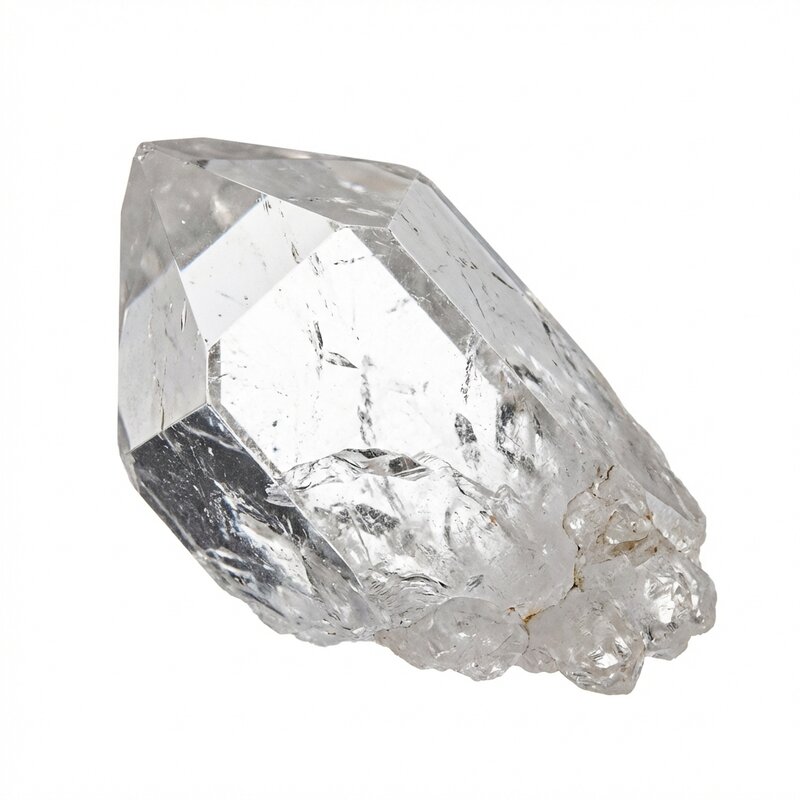
April: Diamond. Pure carbon and, at 10 on the Mohs scale, the hardest natural mineral, diamond stands for eternity and love. Hardness is not the same as toughness, though: a sharp knock can still chip it along its cleavage. Gift idea: for a milestone birthday or anniversary. If a diamond is out of reach, clear quartz is often suggested as a crystal alternative, bright and clear, with its own lore as an amplifier.
May: Emerald. Emerald is green beryl, coloured by chromium or vanadium and 7.5 to 8 in hardness. Nearly every emerald has inclusions, known as its jardin, or garden, and most are treated with oil or resin to improve clarity, so keep them away from heat and ultrasonic cleaners. It stands for hope and renewal. Gift idea: for a new beginning; green aventurine is a softer green crystal alternative.
June: Pearl or Moonstone. Pearl is organic, built up by a mollusc in layers of nacre, and soft at 2.5 to 4.5, so it should be the last thing you put on and the first you take off, after perfume and lotion. Moonstone is a feldspar whose floating blue-white sheen, called adularescence, comes from light scattering between very thin internal layers. Together they stand for purity and intuition. Gift idea: pearl for classic elegance; moonstone, a stone of inner growth and emotional balance, for a crystal lover.
July to September: ruby, peridot, sapphire
July: Ruby. Ruby is red corundum, coloured by chromium, and 9 on the Mohs scale, second only to diamond among the classic gems. Most rubies are heated to improve their colour, a stable and widely accepted treatment. It stands for vitality and passion. Gift idea: for someone with fire in them. Red spinel and garnet make fine alternatives; the famous Black Prince’s Ruby in the British Imperial State Crown is in fact a spinel.
August: Peridot. Peridot is gem-quality olivine, 6.5 to 7 in hardness, and one of the few gems found in only one colour family: green, from the iron in its structure. It has even been found in meteorites. It stands for beauty and delight, and its fresh lime green is lovely against silver. Gift idea: teardrop peridot earrings in 925 silver.
September: Sapphire. Sapphire is corundum like ruby, with the same hardness of 9, in every colour except red. The classic royal blue comes from iron and titanium. It stands for truth and sincerity, and has long been worn by royalty and clergy. Gift idea: for a partner or a trusted friend. Iolite, sometimes called “water sapphire”, and lapis lazuli are blue crystal alternatives.
October to December: opal or tourmaline, topaz or citrine, turquoise
October: Opal or Tourmaline. Opal is hydrated silica; the play of colour in precious opal comes from tiny silica spheres that diffract light. At 5.5 to 6.5, and holding water within its structure, it dislikes knocks, heat and sudden changes of temperature. Tourmaline is a family of boron silicates, 7 to 7.5 in hardness, with one of the widest colour ranges of any gem, from pink and green to protective black tourmaline. Together they stand for creativity and hope. Gift idea: pink opal, the gentle Stone of Resolution, or pink tourmaline for a romantic.
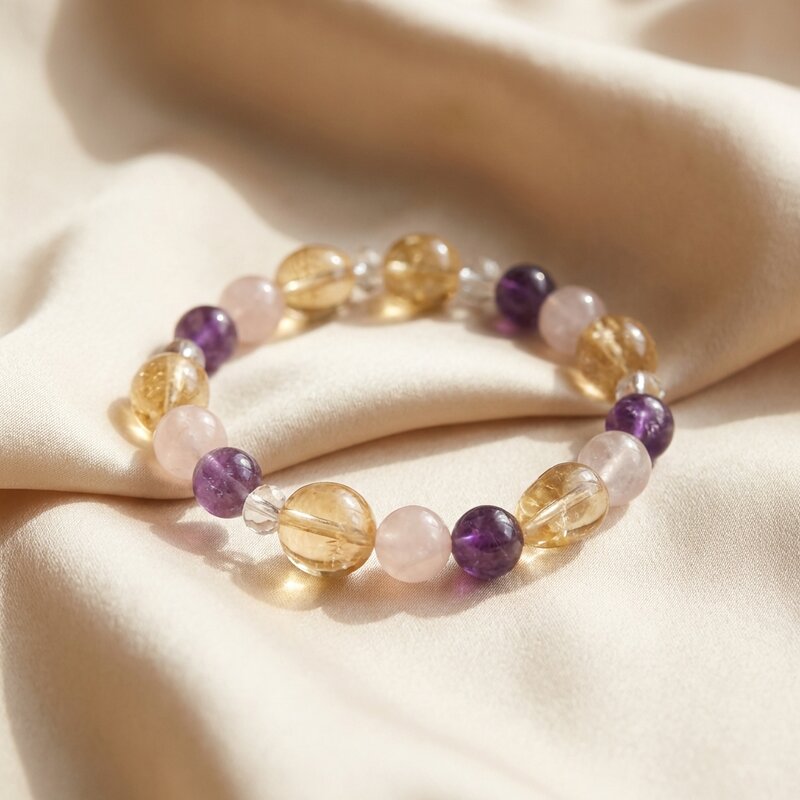
November: Topaz or Citrine. Topaz is an aluminium silicate mineral containing fluorine, 8 on the Mohs scale; its golden “imperial” shades are the traditional November colour, while most blue topaz is colour-treated. Citrine is yellow quartz, 7 in hardness, known as the Success Stone. Both stand for joy and fortune, and their warm colours also make lovely Chinese New Year gifts. Gift idea: a citrine bracelet, perhaps mixed with soft pink quartz.
December: Turquoise. Turquoise is a copper-bearing phosphate mineral, 5 to 6 in hardness, whose sky blue to green comes from copper and iron. It is porous, so much of it is stabilised, and it can discolour with oils, perfume and water. One of the oldest gems in human use, it stands for friendship and luck. Beware imitations: howlite and magnesite are often dyed to look like it. Gift idea: a turquoise ring or pendant, a traditional talisman of good fortune.
Giving birthstone jewellery
A birthstone is one of the most personal gifts you can give: it says you remembered not only the day but the person. A few ideas:
- For a mother or grandmother, the stone of a child’s or grandchild’s birth month, a quiet way of saying the family is with her.
- For a couple, each partner’s birthstone, worn one on each wrist or in matching pieces.
- For a new baby, a birthstone keepsake, put away until the child is old enough to wear it.
- For yourself, there is no rule that you must wear your own month. Many people choose by intention instead; see how to choose your first crystal bracelet.
If you are looking for birthstone jewellery in Singapore, join us live on Instagram or TikTok to see pieces up close and ask questions, or message us on WhatsApp for help choosing. Our birthstone page and Your Stone, which turns a birth date into a keepsake stone reading, are good places to start. For more ideas, see our guide to meaningful crystal gifts.
Crystal meanings and feng shui are shared from tradition for reflection and enjoyment; they are not a substitute for medical, financial or professional advice.