
What is jade?
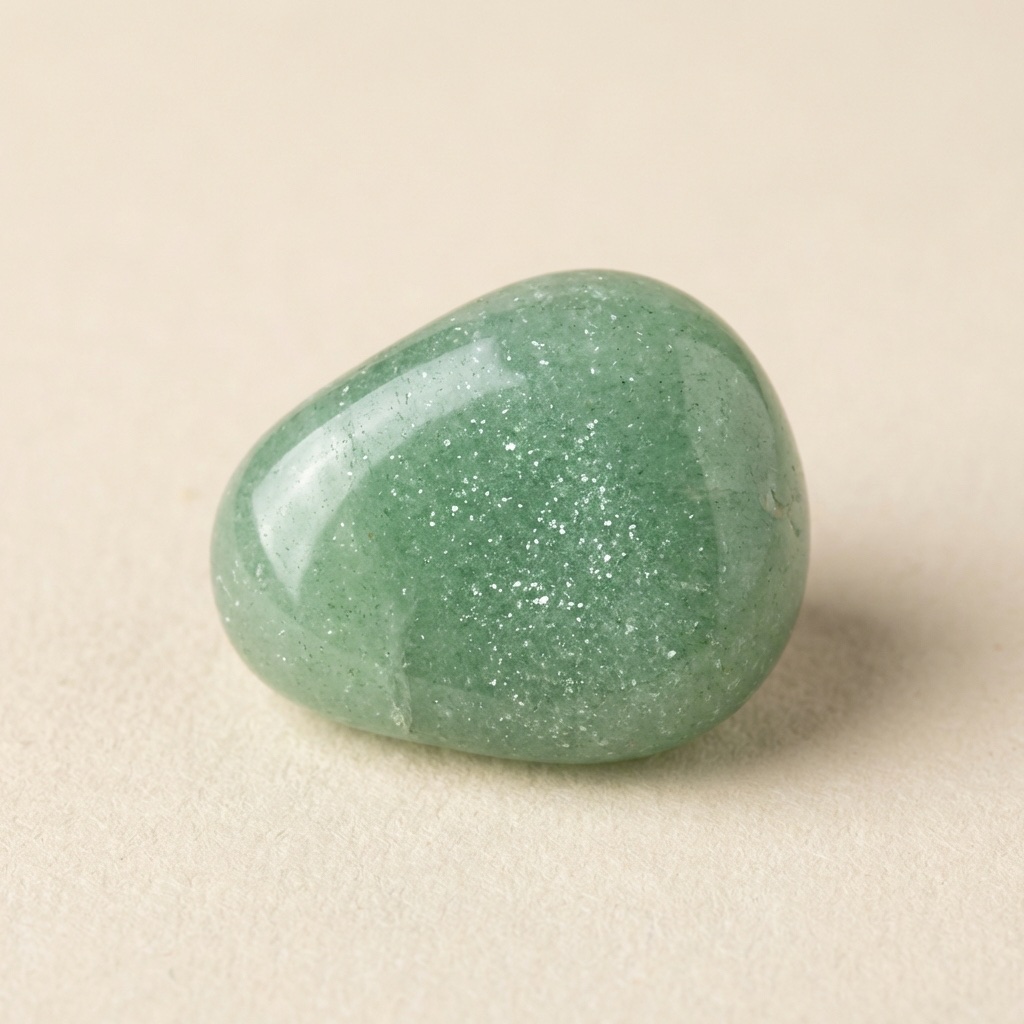
Jade is not one stone but two. For centuries every tough, carvable green stone from Asia went by the same name, until in 1863 the French mineralogist Alexis Damour showed that some of it was a separate mineral, which he named jadeite. The older jade of China is nephrite. Jadeite is a pyroxene and nephrite an amphibole, and both are rocks rather than single crystals: masses of tiny crystals locked together so tightly that jade, though not especially hard, is exceptionally tough. It resists chipping and breaking far better than most gems.
Nephrite is creamy and softly waxy, from white “mutton fat” to deep spinach green. The most celebrated comes from around Hotan in Xinjiang, and nephrite is also mined in British Columbia, Siberia and New Zealand. Jadeite, 翡翠 (fěicuì), is glassier and often brighter. Most gem jadeite comes from northern Myanmar, around Hpakant in Kachin State, with smaller sources in Guatemala and Japan.
Colour comes from traces of other elements. Chromium gives jadeite its vivid green and manganese its lavender, while iron brings the yellows and browns. Nephrite owes its greens mostly to iron.
Jade meaning
Few materials have a longer story in China. Among the earliest jade objects found there are pairs of slit-ring earrings from the Xinglongwa culture of Inner Mongolia, around eight thousand years old. Since then jade has been carved into ritual discs, seals, belt hooks and burial suits, and into the small pendants people wear today. The written language keeps it close: the character for treasure, 宝, is jade beneath a roof.
Confucian thinkers made jade a mirror of character. The Book of Rites compares its qualities to a gentleman’s virtues: its warm, gentle lustre to kindness, its fine, dense grain to wisdom, the clear, long note it gives when struck to music. The same book says a gentleman does not part with his jade without good reason, 君子无故,玉不去身.
In everyday tradition, jade is worn for protection and peace, 平安 (píng’ān). It is given to newborns, brides and elders, and a piece that breaks is said to have taken a blow meant for its wearer. An old saying holds that the wearer and the jade nourish each other, 人养玉,玉养人: worn against the skin for years, the stone is believed to grow more lustrous. In crystal lore jade is a heart stone, associated with calm, harmony and quiet good fortune.
How to wear jade
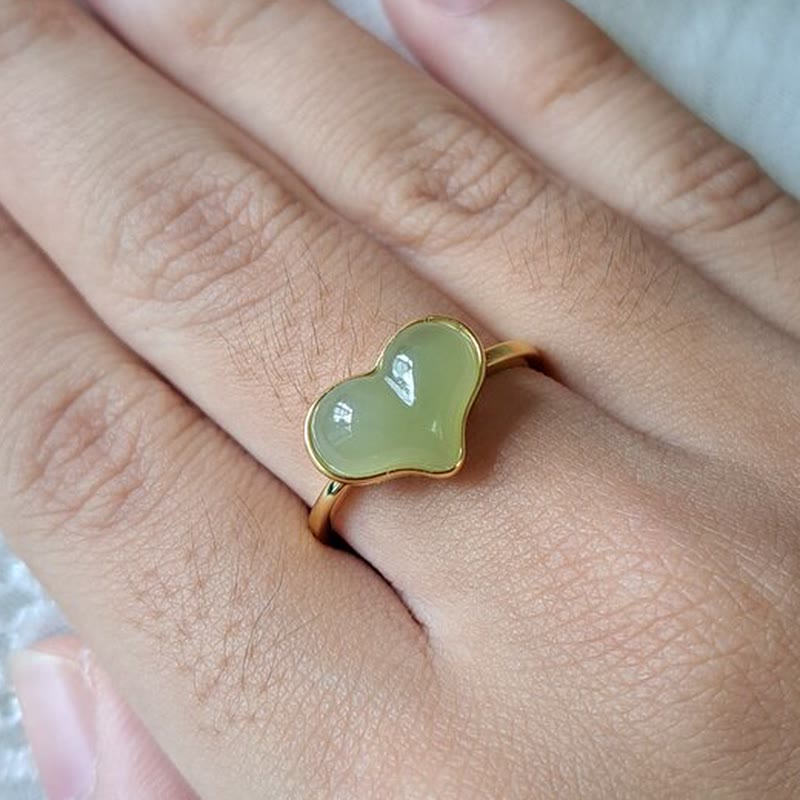
Wear jade on your left hand. In the crystal tradition our guides follow, the left is the receiving side, so a jade ring or bracelet worn there is said to draw its calm and good fortune in. There is a practical reason too: most people work with their right hand, and jade on the left is less likely to be knocked.
Close to the skin is the traditional way to wear it, as a ring, a bangle or a pendant on a cord. Each form carries its own wish. The Ping An Kou 平安扣, a round disc with a hole at its centre, is worn for safety. Carved pendants speak in symbols: the word for bat, 蝠 (fú), sounds like the word for blessing, 福 (fú), so bats appear on jade wherever good fortune is wished. Our jade and Chinese zodiac guide explains the motifs and colours traditionally matched to each sign.
How jade becomes jewellery
Because jade is so tough, it cannot be carved with a blade. Bronze and iron tools cannot cut it. For thousands of years it has been ground instead, with sand and crushed minerals harder than the stone, fed in a wet slurry to drills, cords and small spinning wheels. Today the grit is diamond, but the principle has not changed, and the carver still begins by studying the stone, letting its colour and its flaws decide the design.
We follow one piece from a weathered boulder to a carved 福 pendant in From Stone, a Blessing.
Caring for jade
Jade’s toughness makes it a good stone for every day, but it is not unbreakable. A bangle dropped on a tiled floor can still crack, and at 6 to 7 on the Mohs scale jade can be scratched by harder gems and by grit.
- Clean it simply. Warm water, a drop of mild soap and a soft cloth are safe for any jade. Dry it well.
- Skip the machines unless you are sure. Ultrasonic and steam cleaners are fine for untreated jade, but bleached, resin-filled or dyed jade can be damaged by them. If you do not know your piece’s history, do not risk it.
- Keep it from heat and chemicals. Take jade off for cooking, cleaning with household products and the gym.
- Store it apart. Keep it in soft cloth or its own compartment, away from harder gems and metal pieces.
Fine jadeite is usually finished with a thin coat of colourless wax, a traditional part of polishing rather than a treatment. A gentle buff with a soft, dry cloth refreshes the lustre. To learn how treated and untreated jade differ, see our guide to buying jade in Singapore.
Crystal meanings are shared from tradition and folklore for reflection and enjoyment; they are not a substitute for medical or professional advice.