
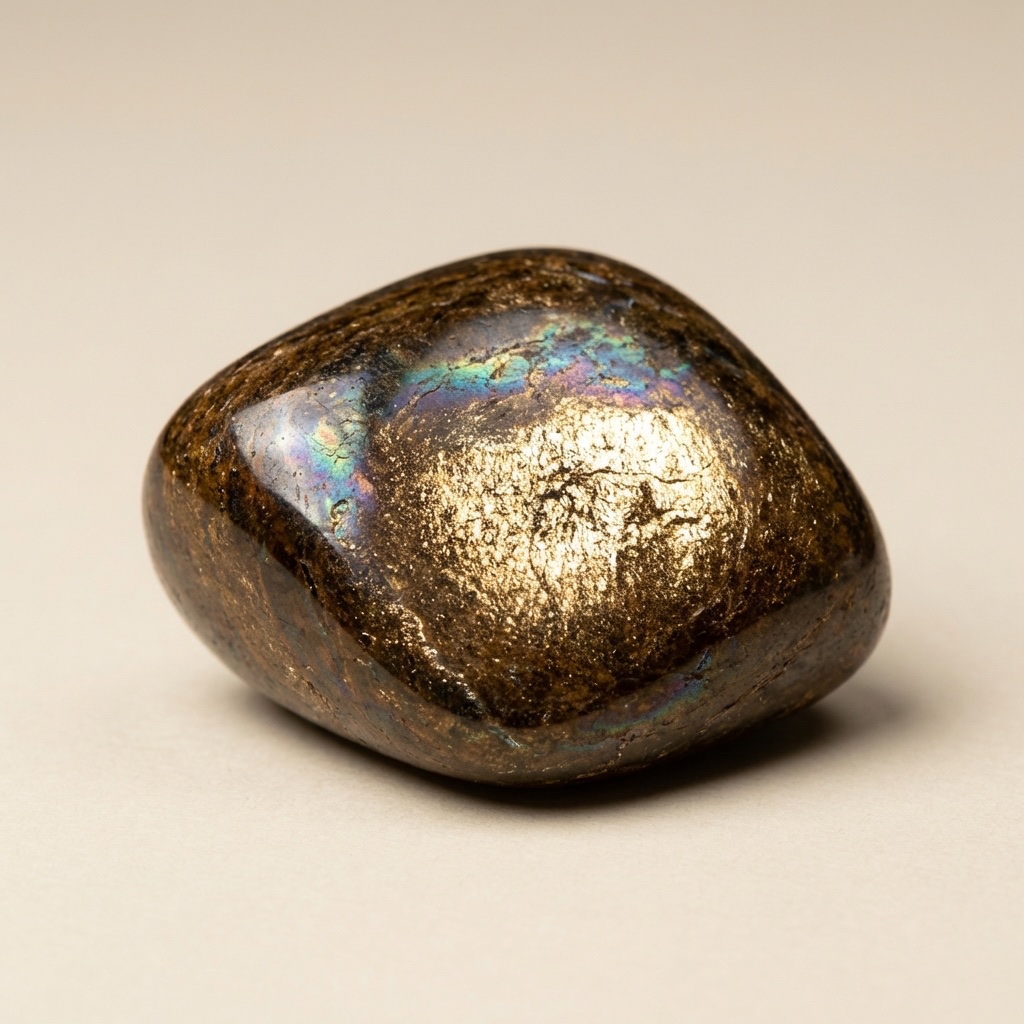
What is bronzite?
Bronzite is a member of the pyroxene family, a group of silicate minerals common in dark, iron- and magnesium-rich igneous rocks, and even found in some meteorites. Mineralogically it is an iron-bearing variety of enstatite, a magnesium–iron silicate, and “bronzite” is a traditional name rather than an official mineral species. What sets it apart is its lustre: tiny aligned inclusions and fine internal layers catch the light and give it a sheen like brushed bronze, an effect known as schiller.
Polished bronzite ranges from chocolate brown to olive, with glinting, fibrous-looking streaks that move as you turn it. At 5 to 6 on the Mohs scale it is softer than quartz, so it is most often cut into beads, palm stones and cabochons. Its Chinese mineral name, 古铜辉石 (gǔ tóng huī shí), means “bronze pyroxene”.
Bronzite meaning
Bronzite has a very particular reputation in crystal lore. Most protective stones are described as absorbing negativity; bronzite is said to mirror it back, returning ill will to where it came from rather than holding on to it. That makes it the stone traditionally reached for when dealing with “polite” bullies — the passive-aggressive colleague, the backhanded compliment, the relative whose criticism always arrives wrapped in concern.
It is also believed to lend a calm, dignified confidence: the ability to stay courteous without being a pushover. Its Chinese label, 反弹 (fǎn tán), means “to rebound”, a neat summary of the idea. It is linked with the root and solar plexus chakras, said to ground you while strengthening your sense of self.
How to wear bronzite
Wear bronzite on your right hand, especially on days when you know you will face difficult people. In crystal practice the right is the outward-facing, protective side, so a bronzite bracelet there is said to act as a reflective barrier between you and whatever is aimed your way. Some people keep a bronzite bracelet for particular meetings or family occasions rather than wearing it every day. For more on sides, see which wrist to wear a crystal bracelet.
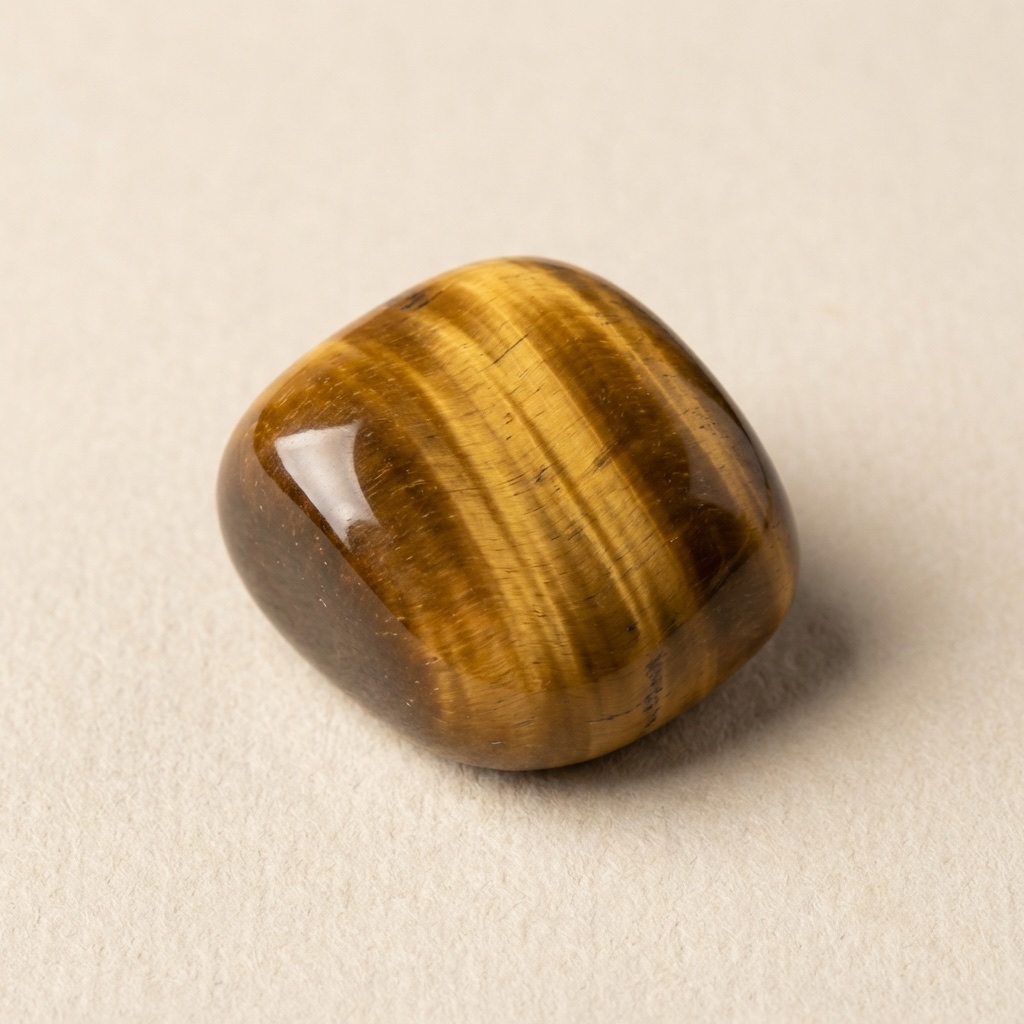
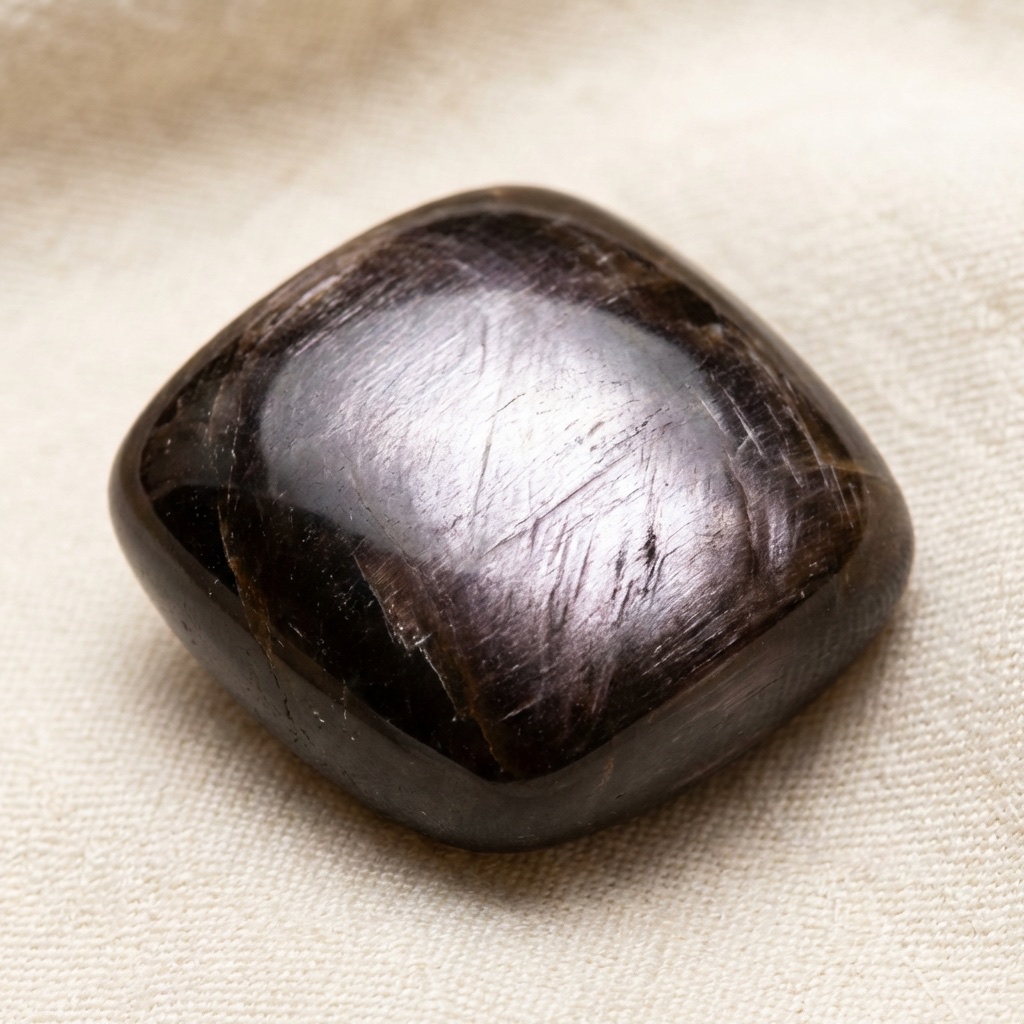
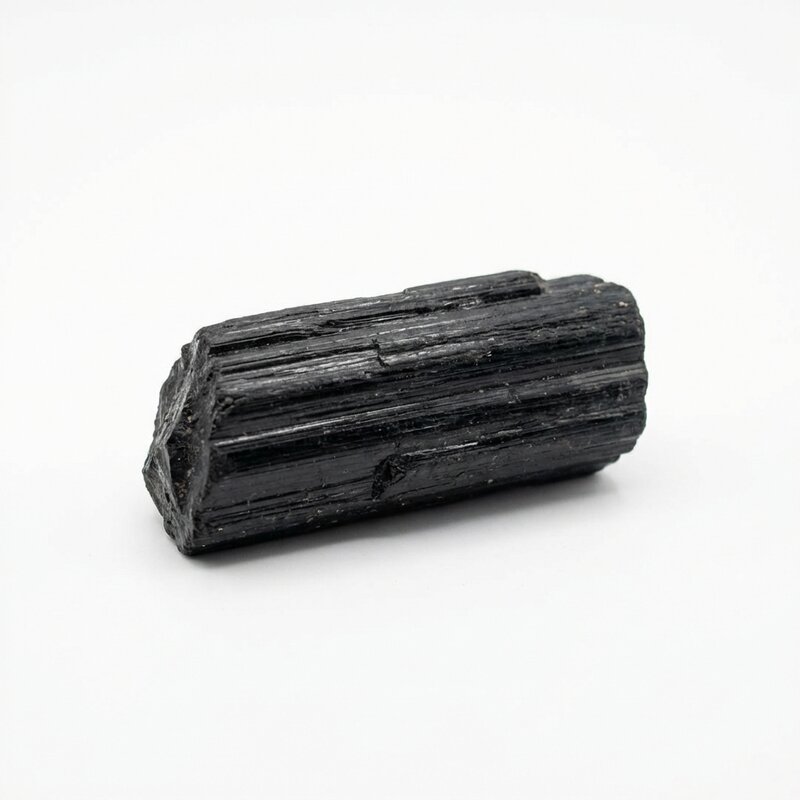
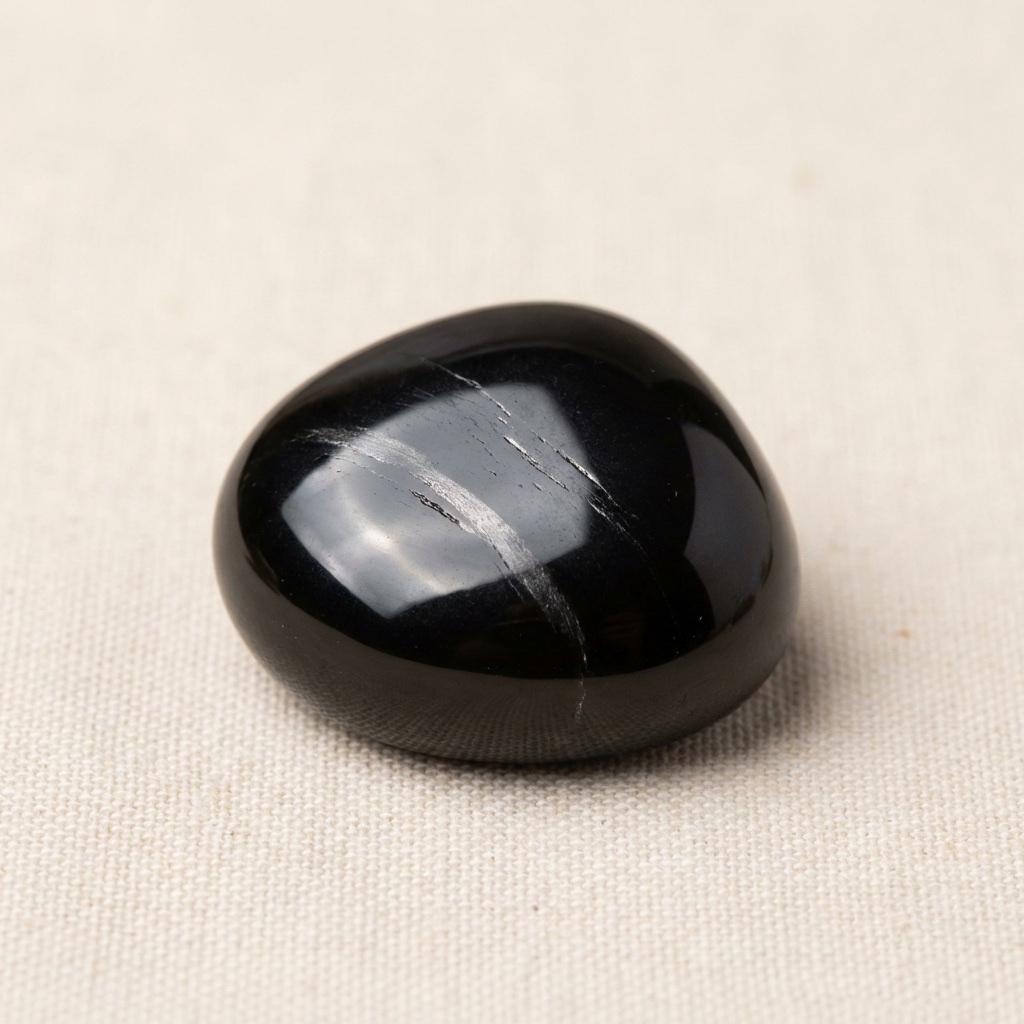
Bronzite combines well with tiger’s eye, a fellow earthy-gold stone of courage, and with black tourmaline when you want both a mirror and a shield. With hypersthene, its pyroxene cousin, it makes a quiet pairing for keeping a low profile in a tense workplace.
Bronzite at work
Because its reputation centres on everyday friction rather than dramatic events, bronzite is a very practical stone for working life. A small bronzite palm stone on the desk is a discreet reminder to hold your ground calmly, and some people turn it in their hand before a difficult phone call or appraisal. In feng shui terms, its earthy brown belongs to the earth element, associated with stability and firm boundaries.
It also makes a thoughtful, low-key gift for someone going through a hard patch at work or school — a gesture that says “don’t let them get to you” without needing words. Its bronze sheen reads as understated rather than showy, so it suits someone who would not usually wear crystals. Add a short note with the intention behind it: before a meeting you are dreading, hold the stone for a moment and decide how you want to respond, rather than how you fear you will react.
Caring for bronzite
At 5 to 6 on the Mohs scale, bronzite is noticeably softer than quartz and can scratch or lose its polish if it rubs against harder stones or metal.
- Store it separately, ideally in a soft pouch, away from quartz and tourmaline.
- Keep it dry. Wipe with a soft, slightly damp cloth, dry it at once, and avoid soaking, salt water and household cleaners.
- Remove it for exercise and swimming. Sweat, chlorine and Singapore’s humidity are hard on both the polish and the elastic.
For energetic cleansing, smoke, sound or a clear quartz cluster are the gentlest methods; see how to cleanse crystals.
Crystal meanings are shared from tradition and folklore for reflection and enjoyment; they are not a substitute for medical or professional advice.